Digital Avatars: Just a Hype or… ?! Online Marketing Rockstars Interview with Stephan Czaja
An interview with Online Marketing Rockstars — and suddenly the topic of digital avatars is in the trends. Not because of a viral video. Not because of a celebrity post. But because Stephan Czaja, founder of CM Models, answered a question there that has been occupying the fashion industry for years: Will digital avatars replace real models — or will they open up a completely new dimension for both sides? What sounds calm and factual in the interview has a lot to it. Because the answer is neither a calming pill nor a scaremongering tactic.
OMR is not just any marketing blog. The magazine reaches hundreds of thousands of decision-makers from e-commerce, branding and digital communication — people who allocate budgets, manage campaigns and decide whether a shoot with real models will take place or whether an algorithm will provide the image. The fact that an interview about digital avatars from the fashion world made it into the trends is no coincidence. It hits a nerve: companies are looking for answers, and most agencies would rather stay silent than take a stance.
CM Models has done the opposite. That’s why this article exists — and why you should read it to the end, whether you want to become a model, work in the fashion industry or simply want to understand where the industry is heading.
- OMR = essential reading for marketing decision-makers
- Avatars = a real topic, not a niche trend
- CM Models takes a clear stance
- Reach of the interview: cross-industry
Digital avatars: What’s really behind them?
Definition — and why it matters
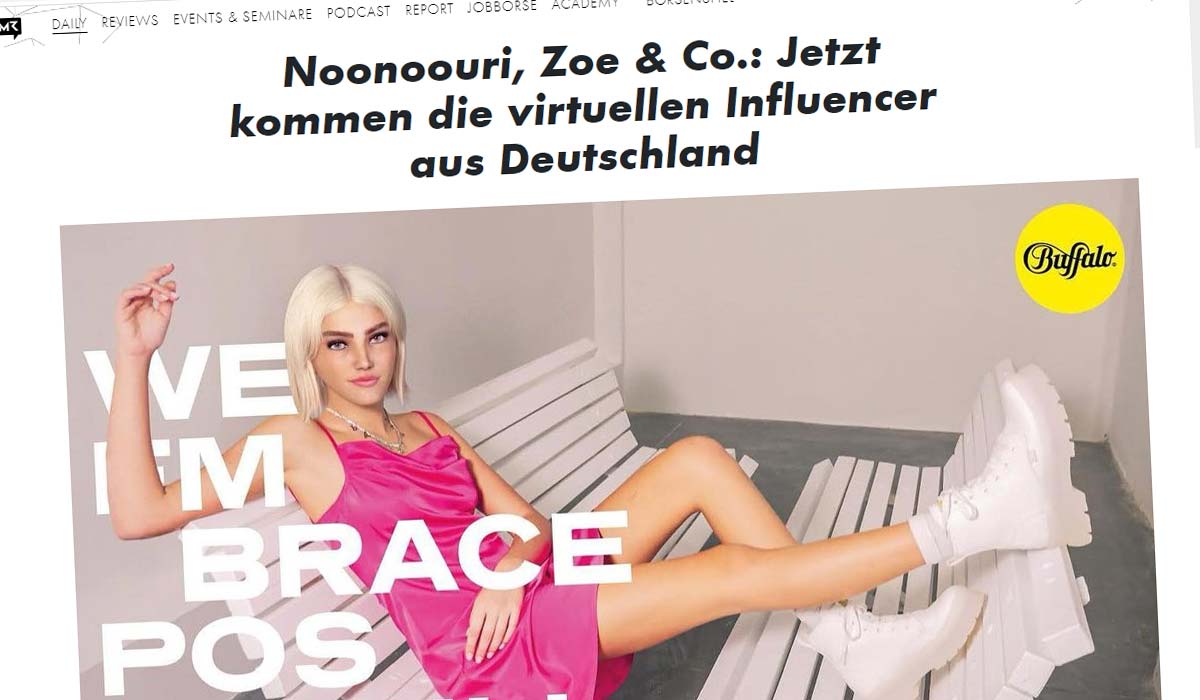
A digital avatar model is not a Photoshop retouching job. It is a fully computer-generated figure based on AI models, 3D rendering and motion capture technology. These figures can be used for campaigns, social media appearances and even live appearances — without travel costs, without agency commissions, without a shoot day. Sounds tempting. It is. But not entirely.
The crucial difference from real models lies not in the technology, but in emotional resonance. Brands that consistently use avatar models report higher scalability — but at the same time weaker emotional connection with the end customer. That’s not a feeling. That’s conversion data.
- AI + 3D rendering + motion capture
- No travel, no agency costs
- Scalable, but emotionally distant
- Conversion weakness with emotional products
Who benefits — and who loses out?
Sport brands, technology conglomerates and fast fashion platforms are intensively experimenting with avatar models. The reason: high image frequency, low costs, global consistency. Those who need hundreds of product images every day save significantly with avatars. Luxury brands and emotional fashion concepts, on the other hand, report a clear return to real models — because authenticity cannot be simulated. A
“Digital avatars are the most powerful production tool since digital photography — but they don’t replace people. They make the wrong models visible and the right models more valuable.” — Stephan Czaja, CM Models, in an OMR interview
What this means for real models — specifically and without sugarcoating
The honest market analysis
Anyone who wants to
The requirements for being a model are shifting: personality, movement intelligence, and brand loyalty are becoming more valuable. Measurements remain relevant, but they are no longer the sole criterion. Anyone wondering whether they meet the model measurements and requirements should also ask today: what story can I tell that no algorithm can tell?
- Lower market: avatars take over product photos
- Upper market: real models are becoming more valuable
- Personality beats standard measurements
- Emotional campaigns: no avatar territory
Niche markets that avatars will never reach
Catwalk appearances at the
The same applies to shooting situations that rely on chemistry, spontaneity and reaction. German fashion designers confirm this repeatedly in internal conversations: the best campaign images are created in moments that no prompt in the world can predict.
Comparison: Digital avatars vs. real models
| Criterion | Digital Avatar | Real Model |
|---|---|---|
| Production costs | Low to medium (after setup) | Medium to high |
| Scalability | Extremely high | Limited by time |
| Emotional resonance | Low to medium | High to very high |
| Brand authenticity | Weak | Strong |
| Live use (events, catwalk) | Not possible | Core competence |
| Flexibility (style, mood) | Very high | Dependent on person |
| Long-term brand loyalty | None | Buildable |
| Use in luxury segment | Rarely successful | Standard |
What you should do specifically now
For aspiring models
The avatar debate is no reason for panic — but a wake-up call to sharpen your profile. Anyone applying to a
The question of the
- Sharpen your personality, not just optimise your measurements
- Have a professional portfolio created
- Choose a reputable agency, don’t pay any fees
- Define your niche: catwalk, editorial, commercial
Checklist: Am I Avatar-proof as a model?
- ☐ I have a clearly recognisable presence
- ☐ My portfolio shows personality, not just poses
- ☐ I can handle live situations confidently
- ☐ I know my market value (earnings, niche)
- ☐ I work with a
commission-free agency - ☐ I have experience in at least one core category
- ☐ I am ready to model
as a side job - ☐ I have applied to an agency for representation
For companies and marketing managers
The smart approach is not Avatar or Model — but Avatar and Model, strategically combined. Product catalogues, fast social media content and scalable visualisations: Avatars. Campaigns, catwalk, emotional marketing and luxury segments: real models. Those who confuse the two waste budgets. Those who separate them correctly optimise both.
- Product photo volume → Avatar makes sense
- Emotional campaign → real model essential
- Live events → Avatar physically impossible
- Luxury branding → avatar damages brand value
Common questions on the topic
Will digital avatars completely replace real models?
No. Avatars take over repetitive, cost-effective product visualisations — real models retain the monopoly on emotional impact, live events and luxury positioning. Brands that have fully switched to avatars report measurable declines in brand trust and emotional customer loyalty.
Which models are least affected by avatars?
Models with a strong personality, live experience (catwalk, events) and a clear niche positioning (curvy, diversity, luxury) are the safest. Those who pose interchangeably are interchangeable — whether through another model or an algorithm.
Should I still look for an agency as an aspiring model?
Yes — and one that doesn’t ask for upfront fees. Contacting a reputable modelling agency costs nothing except preparation. If you’re wondering whether
Has the OMR interview changed Stephan Czaja’s opinion on the avatar issue?
No — it has made it public. CM Models has represented the position for years that technical innovation and human creativity are not competitors. The interview has made this stance accessible to a new, broader audience. The trend status at OMR confirms: The industry was ready for this clarity.

Bravo Magazine: CM among the Top 10 modelling agencies 2018
#1 Magazine feature for Hannah in the Cold Blood Magazine "Full Contact" by Jan Krueck
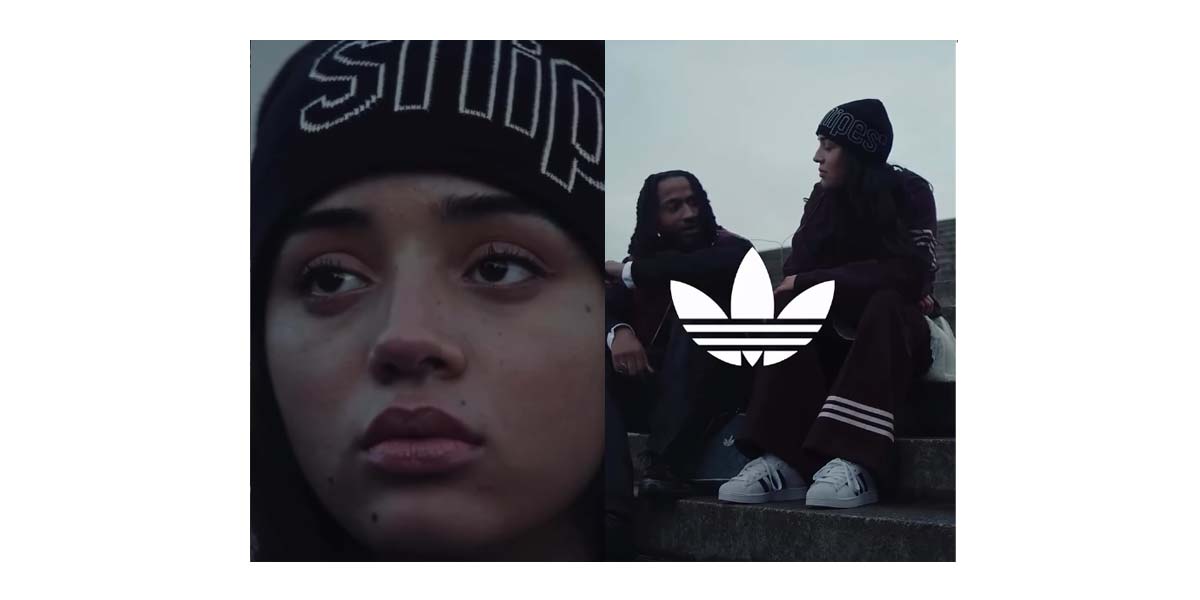
Snipes x Adidas with Ariane in Berlin - New Streetwear

Emmanuel for L'Officiel Hommes Belgium - Issue: Spring Awakening!
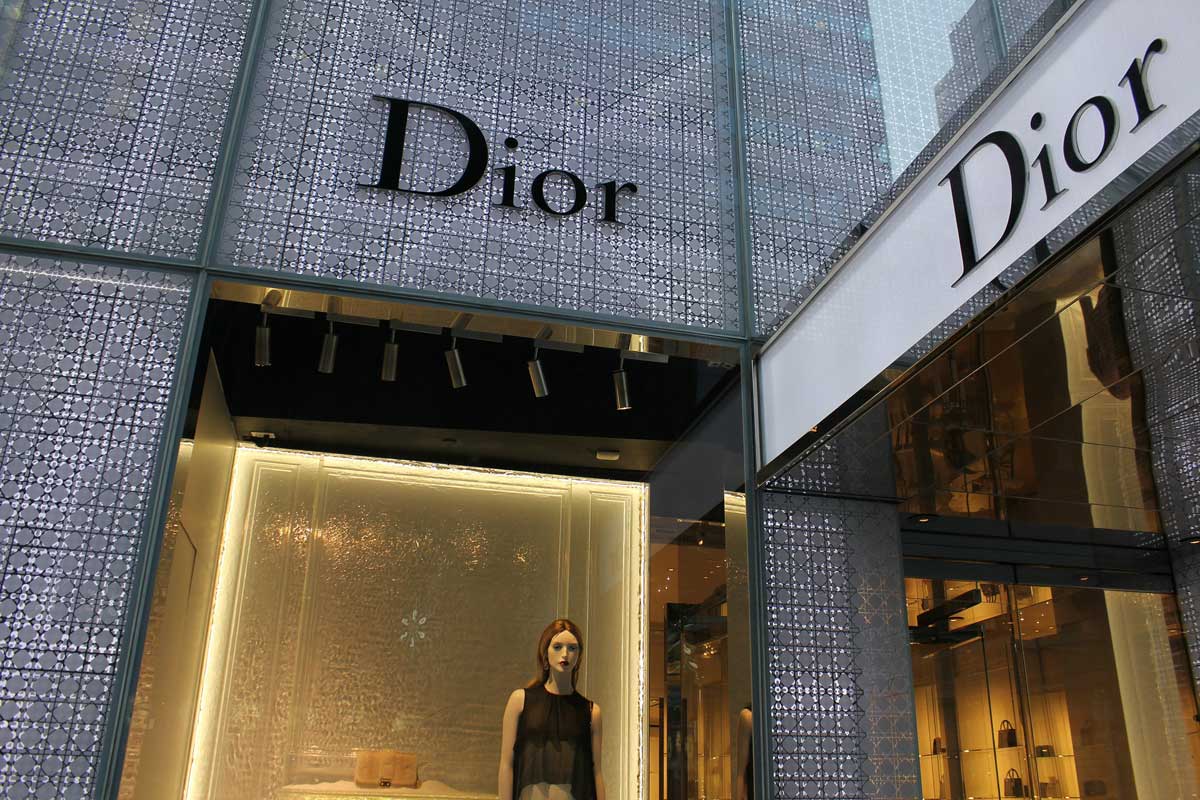
Dior x Jonathan Anderson (previously Loewe): New Creative Director

Kering new board: luxury group in transition - Gucci, Balenciaga and Saint Laurent