Model Agency for Plus Sizes: When Am I Too Big for the Runway?
The question sounds simple, but it isn’t: When are you too big for the runway – and when are you exactly right for a market that’s just exploding? The truth that many agencies don’t dare to say out loud: there is no universal limit anymore. What exists are different segments with different standards – and those who don’t know them apply for the wrong casting, with the wrong look, at the wrong agency. This text will tell you exactly where you stand.
What “too big” really means – and for whom
The term “too big” is segment-dependent. High-fashion runways in Paris or Milan – think of the
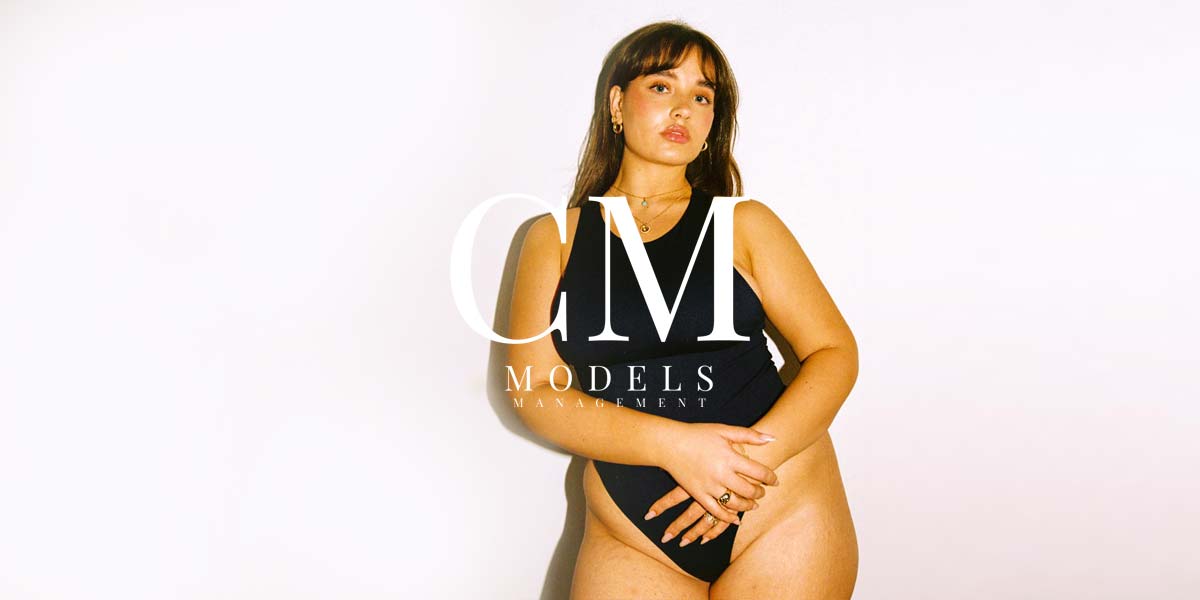
At the same time, a complete parallel system has become established. Curvy editorials, plus-size campaigns and body positivity lookbooks are shot with their own castings, their own directors and their own agencies. In this system, sizes 42 to 50 are the standard – and anyone who appears too slim is just as out of place.
- High Fashion: Ready-to-wear size 32–36
- Curvy/Plus-Size Segment: Size 42–50
- Commercial/Catalogue: Size 36–42 often available
- Lingerie Plus: from cup size D upwards
The no-man’s land between the segments
Those who wear a size 38 or 40 often find themselves in between. Too big for high fashion, too small for plus-size – this is the most common frustration that aspiring models describe. The honest answer: the commercial segment and catalog shoots are your core market. Here, brands such as online retail giants and sportswear chains are looking for exactly these proportions, as they represent the average customer. This is not a consolation – it is a real market with real bookings. Those who plan to
Becoming a Curvy Model – these measurements really matter
The fashion industry has developed its own sizing standards for the plus-size segment, which differ significantly from those of classic runway models. Anyone who wants to work seriously as a Curvy Model should be aware of the following guidelines – they are not a dogma, but they reflect what agencies and clients actually book.
| Segment | Ready-to-wear size | Typical measurements (B/T/H in cm) | Minimum height |
|---|---|---|---|
| High Fashion Runway | 32–36 | 80–60–88 | 175 cm |
| Commercial / Catalogue | 36–42 | variable | 168 cm |
| Curvy / Plus-Size Print | 42–48 | 100–85–110 (approximate) | 170 cm |
| Curvy Runway | 42–46 | proportional to size | 172 cm |
| Lingerie Plus | 42–50 | Bra size D+, proportional | 165 cm |
Proportions outweigh weight
What many don’t know: agencies for plus sizes don’t book based on kilograms, but on proportions. An even distribution between bust, waist and hips is more important than the number on the scale. This means: two models with the same weight can have completely different chances, depending on how their body distributes the measurements. Find out about the exact model measurements and requirements before you apply – so you know whether you fall into the right category.
“We don’t book clothing sizes – we book proportions and presence. A curvy model with uneven measurements is harder to place than a conventional model who is half a centimetre outside the norm.”
— Booking Director of an international agency for plus-size models
Runway vs. Print – two completely different worlds
The catwalk is the most visible, but not the most profitable field. Anyone who reads
Where plus-size models are most commonly booked
- Online shop photo shoots (largest market)
- Fashion catalogues from major mail order retailers
- Body positivity campaigns
- Sportswear collections in plus sizes
- Lingerie and swimwear editorials
- Social media content for brands
Anyone wondering
How to apply to a modelling agency for larger sizes
The most common mistake: applicants send the same application photos they would use for conventional agencies. This doesn’t work. A specialised agency wants to see your proportions, your presence and your potential in the right segment. Before you approach a
Application materials for the Curvy segment
Your
- ☐ Body-conscious outfit, no loose clothing
- ☐ One full-body photo from the front and one from the back
- ☐ Natural portrait without heavy make-up
- ☐ Include current measurements in writing (B/T/H/Size/Weight)
- ☐ Clearly state your dress size
- ☐ No dates on the photos – keep them always up to date
The
Which agencies are the right ones?
Not every agency that has “Plus-Size” in its description is legitimate. Check: Does the agency have active bookings in your segment? Which brands has it worked with in recent campaigns? Does it ask for money upfront? That would be a red flag – read whether a
Before you contact an agency directly, find out how you should write to a modelling agency – the cover letter often determines the first impression even before the first photo. If you’re just starting out, the
Common questions – answered clearly
From which clothing size are you considered a plus-size model?
In Germany, the plus-size segment starts at size 42. Some agencies set the limit at 40 if the proportions clearly lean towards a curvy aesthetic. Size 38 is usually not bookable in the curvy market – that is commercial territory, not plus-size.
Is there a maximum weight for curvy models?
No – there is no weight limit, but there are proportion guidelines. The key is the ratio of bust, waist and hip. Someone wearing a size 50 with clearly defined proportions is more bookable than someone in size 46 with an unclear silhouette. Weight alone says nothing.
Can I even walk the runway with a size 38–40?
For classic high-fashion shows hardly – the sample sizes structurally don’t allow it. For curvy runways you are too small in size. Realistic options: commercial shows by regional fashion houses, window display events, showroom presentations.
Is it worth casting in another city or abroad?
Yes – especially for curvy models.

Model Agency Without a Minimum Size: Measurements and Weight
Model Measurements: Requirements and Size for High Fashion, Advertising, Plus Size & Curvy Models
Snipes x Adidas with Ariane in Berlin - New Streetwear
Emmanuel for L'Officiel Hommes Belgium - Issue: Spring Awakening!
Milva x JOSH V: Autumn Campaign – Elegance Meets High Fashion
Nafa Salvana x Diesel SS